

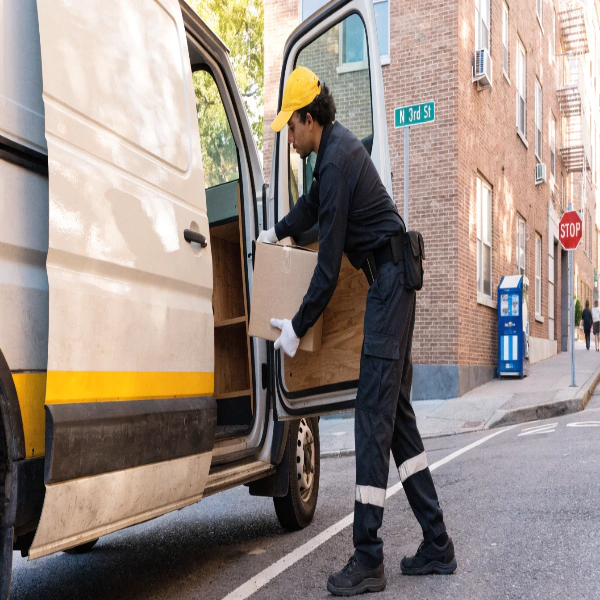
Delivery driving has become part of everyday life in areas like Drayton.
What’s changed isn’t just the volume of vehicles on the road, but the way those vehicles are being used. More drivers are working through flexible arrangements, completing high numbers of deliveries across unfamiliar routes, often under time pressure.
This shift has introduced a different type of accident risk.
It has also made liability harder to define.
Understanding how these accidents happen requires looking beyond the moment of impact and focusing on the conditions surrounding the driver at the time.
How has delivery work in Drayton changed road risk?
The structure of delivery work has evolved quickly.
Drivers are no longer always operating within traditional employment models. Many work through platforms, manage their schedules, and rely on completing a high volume of jobs to maintain income.
This shift changes behaviour on the road.
In Drayton, delivery drivers are more likely to:
- Stop frequently in short succession
- Navigate unfamiliar residential layouts
- Make quick decisions about parking and access
- Adjust routes in real time based on efficiency rather than safety
These behaviours are not necessarily reckless, but they introduce risk in ways that standard driving patterns do not.
Where delivery driver accidents tend to occur
Accidents linked to delivery work often happen in specific types of environments rather than on open roads.
In Drayton, this includes:
- Residential streets with limited parking
- Narrow access routes with restricted visibility
- Areas with high pedestrian movement
- Locations where vehicles frequently stop and start
The combination of movement, stopping, and time pressure creates a pattern of incidents that differ from standard traffic collisions.
A realistic Drayton delivery scenario
A driver is completing a delivery route through a residential area in Drayton.
They are behind schedule and approaching the next drop.
There is no clear parking space nearby. To avoid delay, the driver stops partially on the road and exits the vehicle quickly.
Another vehicle approaches from behind. Due to parked cars, visibility is reduced.
A collision occurs.
The situation may appear straightforward at first.
However, the decision to stop where the driver did was influenced by time pressure and route demands, not just individual judgement.
Breaking down the contributing factors
When accidents like this are reviewed, attention shifts to the conditions surrounding the incident.
Key considerations often include:
- Whether the driver had a realistic option to park safely
- Whether time pressure influenced the decision to stop
- Whether the road layout made safe stopping difficult
- Whether other drivers adjusted appropriately to the situation
- Whether the delivery schedule created unnecessary urgency
- Whether the driver was familiar with the area
These factors are not always visible at the scene, but they play a central role in how liability is assessed.
Why responsibility is not always straightforward
One of the defining features of delivery driver accidents is the question of responsibility.
In Drayton, liability may involve more than just the driver.
Depending on the circumstances, it may extend to:
- The driver’s own actions and decisions
- The expectations set by the delivery platform
- The structure of the delivery route or workload
- The environment in which the delivery took place
This does not remove driver responsibility, but it introduces additional layers that need to be considered.
How working conditions influence behaviour
Delivery work is shaped by efficiency.
Drivers are often working within tight timeframes, managing multiple stops, and balancing speed with accuracy.
This can lead to:
- Shorter stopping decisions rather than safer ones
- Increased reliance on judgement in unfamiliar areas
- Reduced time to assess surroundings before acting
- Greater exposure to unpredictable interactions with other road users
In Drayton, where residential layouts can vary, this effect becomes more noticeable.
Behaviour is influenced by the structure of the work, not just individual choice.
Where claims can become contested
Delivery-related accident claims are often disputed.
This is usually because responsibility is not clearly defined from the outset.
Common points of dispute include:
- Whether the driver was acting independently
- Whether the platform holds any responsibility
- Whether the environment contributed to the incident
- Whether another road user could have avoided the collision
Without clear evidence, claims can be reduced to a basic driver fault argument, even when broader factors are involved.
This is where legal analysis becomes important. Firms such as Marley Solicitors often focus on identifying how the working structure contributed to the incident, not just the immediate actions of the driver.
What to do after a delivery driver accident in Drayton
The immediate response to an accident can influence how the situation is later assessed.
Key steps include:
- Recording the exact position of all vehicles involved
- Taking photographs of the surrounding road layout
- Noting any visibility restrictions or obstructions
- Identifying whether the driver was actively completing a delivery
- Collecting witness details where possible
These details help establish the context behind the incident, which is critical in these types of claims.
Delivery work is changing how accidents are assessed
Delivery driving in Drayton is not just about movement from one point to another.
It is shaped by a working model that prioritises speed, flexibility, and volume.
As that model continues to grow, so does the complexity of accidents linked to it.
These incidents are not always the result of a single mistake.
They are often the result of conditions that influence how decisions are made in real time.
Understanding that difference is key to assessing responsibility properly and recognising when a claim involves more than just the driver.