

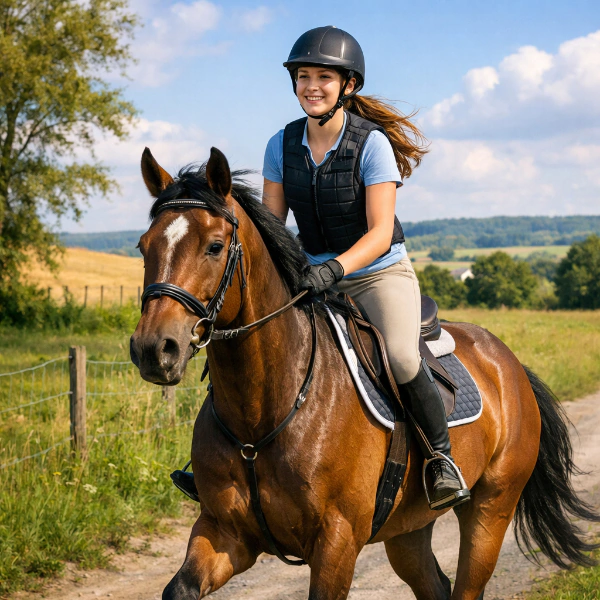
Equestrian and rural environments carry a different kind of risk.
In Somerby, where open land, livestock, and horse activity are part of daily life, injuries do not always follow predictable patterns. Conditions can change quickly. Animal behaviour is not fixed. Ground that was stable one day may not be the next.
When something goes wrong, the assumption is often that it was unavoidable.
That assumption is not always correct.
The key issue is whether the risk was understood and managed properly before the incident occurred.
Why rural and equestrian settings are harder to assess
Unlike structured workplaces, rural environments do not operate within clearly defined systems.
There are fewer fixed controls. More reliance on judgement. More variation in conditions.
In Somerby, equestrian activity often involves a mix of riders, handlers, landowners, and members of the public using the same space in different ways.
This creates a situation where:
- Risk is partly natural rather than fully controlled
- Responsibility may shift depending on who is involved
- Conditions can change without obvious warning
- Experience levels vary between individuals
These factors make liability less obvious at first glance.
Scenario one: Handling injury before riding
A rider is preparing a horse on private land in Somerby.
The horse becomes unsettled during handling and reacts suddenly. The rider is injured before even mounting.
At first, the situation appears to be a simple case of animal behaviour.
Looking more closely, different questions begin to matter.
Was the horse known to react in this way?
Was the environment contributing to that behaviour, such as noise or confined space?
Was the rider experienced enough to handle that situation safely?
The injury may involve natural behaviour, but the responsibility depends on whether that behaviour was anticipated and managed.
Scenario two: Ground conditions and rider injury
A rider is moving across land that appears stable.
Recent weather has softened the surface, although this is not immediately visible. The horse loses footing, and the rider falls.
This incident is often treated as an environmental accident.
However, the assessment does not stop there.
Was the condition of the land known or likely given recent weather?
Should the route have been avoided or reassessed?
Was the rider made aware of potential instability?
The focus shifts from the fall itself to the decision to proceed under those conditions.
Scenario three: Interaction with a third party
A member of the public is walking near a route commonly used by riders in Somerby.
A horse is startled by the sudden presence of the individual. The rider loses control and is injured.
This situation introduces a different layer of complexity.
The environment is shared. Responsibility is not immediately clear.
Key considerations include whether the area was clearly used for equestrian activity, whether there was any form of separation, and whether the actions of either party contributed to the incident.
Liability may be shared depending on how the interaction developed.
Scenario four: Equipment failure during activity
A rider uses tack that has been in regular use.
During activity, part of the equipment fails, leading to a fall and injury.
This introduces a more controlled element into the situation.
Unlike ground conditions or animal behaviours, equipment is expected to be maintained.
Attention turns to whether the condition of the equipment was checked, whether it was suitable for the task, and whether there were signs of wear that should have been addressed.
This type of incident often leads to a clearer line of responsibility.
How responsibility is assessed across these situations
Across all of these scenarios, liability is not determined by the presence of risk alone.
Risk is expected in equestrian and rural environments.
The key issue is whether that risk was managed appropriately.
This typically involves assessing:
- Whether the risk was known or should have been recognised
- Whether reasonable steps were taken to reduce that risk
- Whether the individual was exposed to a level of danger that could have been avoided
- Whether control over the situation was clearly defined
These principles apply even where conditions are not fully controllable.
Why these claims are often disputed
Equestrian and rural injury claims in Somerby are frequently challenged.
This is largely because risk is inherent in the activity.
It can be difficult to separate what is unavoidable from what could have been prevented.
Disputes often arise because:
- There is limited evidence of conditions at the time
- Responsibility is shared between multiple parties
- The behaviour of animals introduces unpredictability
- Changes in environment are not always recorded
Without clear context, incidents may be dismissed as part of normal activity.
Legal teams such as Marley Solicitors often focus on identifying whether the situation went beyond expected risk and into preventable conditions.
What to do after an equestrian or rural injury in Somerby
Capturing the situation accurately is important, particularly where conditions can change quickly.
It helps to record:
- The exact location of the incident
- Ground and weather conditions at the time
- The behaviour of the horse or animal involved
- Any known issues prior to the incident
- Who was responsible for managing the activity
These details help establish whether the situation was foreseeable and manageable.
Why familiarity can increase risk in rural environments
One of the most overlooked factors in rural injuries is familiarity.
When the same land, routes, or equipment are used repeatedly, it becomes easy to assume that conditions remain consistent.
In reality, small changes can have a significant impact.
Ground conditions shift. Equipment wears down. Animal behaviour changes depending on environment.
When these changes are not reassessed, the level of risk increases without being noticed.
Risk is expected, mismanagement is not
Equestrian and rural injuries in Somerby involve environments where risk is part of the activity.
That does not remove responsibility.
The key question is whether the risk was managed in a way that reflects the conditions at the time.
Understanding that difference is what allows these situations to be properly assessed and prevents them from being dismissed as unavoidable.